


The harsh reality of inter-state relations, where Self Interest is always the main driver behind every alliance and friendship. In the international geopolitical scene, one that illustrates this situation is the bilateral relationship between India and China which is colored by border disputes. Tensions between these two Asian giants have never really subsided, despite various efforts to reduce the conflict.
In the 1950s, China and India's bilateral relations were closely connected like brothers or known as “Hindi Chini Bhai Bhai”, unfortunately this condition did not last long until the 1962 border conflict which caused a setback in bilateral relations and finally did not return to normal until the late 1980s.
When the cold war period ended, the two countries agreed to reform their bilateral relations, to engage in various cooperation frameworks in various political, economic, social, cultural and other fields. At the international level, both countries have participated in various international initiatives such as BRICS and the Shanghai Cooperation Organization (SCO). But the situation of territorial disputes continues to be a source of rift in bilateral relations between the two.
As expressed by geopolitical expert Henry Kissinger, that conflicts between two great powers will adapt to geopolitical changes to defend their interests In this context, it reveals that efforts to maintain and strengthen the strategic position by the Great Power, namely China and India involved in border conflicts, will continue to increase their military strength and troops on the border.
The border war between India and China in 1962 marked the starting point of a series of tensions that continue to this day to prove how fragile peace in the region is. It has had a traumatizing effect on India.
In understanding the dynamics of relations between the two countries, it appears that the border conflict between India and China is not simply a matter of territorial claims. It is a manifestation of a game of power and self-interest between two large countries that continue to try to reshape the geopolitical map of Asia.
In line with John Mearsheimer's opinion, he asserts that “Great powers are always searching for opportunities to gain power over their rivals, with territorial expansion being one of the primary means.” In this context, the tensions between India and China reflect the ongoing efforts of both countries to strengthen their strategic position in Asia.
Timeline of China - India Territorial Dispute Tensions
- Sino Indian War (1962)
The Sino-Indian War is documented as the first major physical confrontation in the history of China India relations. The beginning of this tension was caused by China building a 750-mile road across the Aksai Chin, this road is the link between Tibet and Xinjiang, which includes 112 miles over Indian claimed territory.
India responded by protesting the Chinese construction because it violated one of the principles of the 1954 Panchseel Agreement, which states that both countries are required to respect each other's territorial integrity and sovereignty. The claim action then ended with clashes between the respective armies in the border region. Since then, relations between India and China have deteriorated.
The first battle took place in 1959 but it culminated on October 20, 1962. The Chinese military launched a massive offensive with 80,000 Chinese soldiers against a minimally prepared Indian military force. This act of war took place in a key area more than 600 miles east and west of India. China came out as the superior party and managed to control Aksai Chin in the western sector and successfully attacked Indian military forces south of the Namka river.
In this conflict, India permanently lost territory estimated at around 43,000 km2 and more than 3,000 soldiers were killled. The 1962 incident then became the root of other physical confrontations, namely, the Nathu La and Cho La Clashes (1967), Tulung La Ambush (1975), Doklam Plateau Conflict (2017), Ladakh Confrontation (2020) and other acts of provocation.
- Nathu La and Cho La Clash (1967)
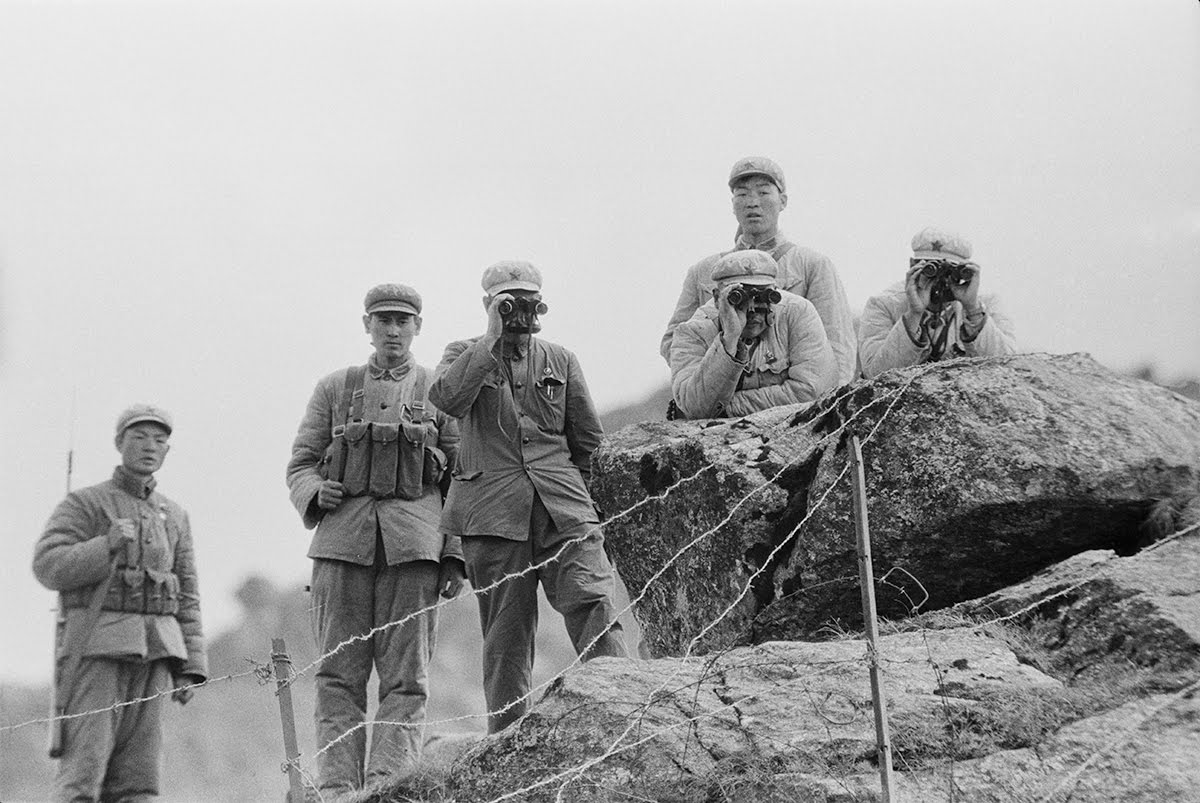
In 1967, Indian and Chinese troops faced off in the eastern Himalayas. They were at dispute over the boundary fence at Nathu La, a strategic pass in Sikkim. The Indians wanted to build an iron barrier as a defense against Chinese attacks. To the Chinese, this seemed like arrogant aggression, coming from an army they had defeated five years earlier.
The battle between the two countries finally erupted on September 11, 1967 beginning with months of allegations from both sides of attacks and territorial intrusions.
In this clash, the Indian Army was able to repulse the Chinese. According to the record of the clash written by Major General Sheru Thapliyal, who was stationed in Sikkim at the time, the Indian side lost more than 70 soldiers while Chinese casualties were more than 400. The second round of clashes erupted at Cho La on October 1, 1967. In 1967, Sikkim was a protectorate of India and joined the Indian union as a state in 1975. China recognized the border in the Sikkim sector in 2003.
- Tulung La ambush (1975)
Tulung La is part of the eastern sector of the border between India and China. In October 1975, Chinese People's Liberation Army troops conducted a patrol along the LAC (Line of Actual Control) in Arunachal Pradesh, leading to the death of four Indian soldiers. No Chinese casualties were reported. In this context, the clash at Tulung La in 1975 can be seen as part of a long-running conflict between India and China that stems from disagreements over border areas and strategic interests.
- Doklam Plateau Clash (2017)
The Doklam Plateau dispute is actually a conflict between China and Bhutan. However, India became involved in this conflict because Bhutan has been an ally of India since 2007. In addition, according to India, Chinese military activity in the Doklam area could threaten the security of its northeast region. The Doklam conflict in 2017 is actually an extension of the unfinished border conflict between India and China. Although, Bhutan also benefited militarily against China due to India's military superiority over its own.
- Conflict in the Galwan Valley 2020
The conflict took place at the Line of Actual Control (LAC), the demarcation line separating Indian-controlled territory from Chinese-controlled territory, located in Ladakh's Galwan Valley.
The main cause of the conflict is the difference in territorial claims between India and China. China built military camps in the Galwan Valley, which is considered a contravention of the agreement between the two sides. India accuses China of starting the fight by developing infrastructure in the valley
From this conflict, at least twenty Indian soldiers were killed as a result of this confrontation, one of whom was an Indian military officer. This military tension was the first event that led to bloodshed since the Sino-Indian War in 1962.
- Clashes in an area near Tawang Sector in Arunachal Pradesh state (2022)
A clash between Indian and Chinese armies occurred in the Tawang sector of the northeastern Indian state of Arunachal Pradesh on December 9, 2022. The incident involved an intense physical confrontation with clubs and sticks for several hours, inflicting minor injuries on soldiers from both sides. The clash took place in an area which China claims as South Tibet, but is controlled by India.
References
Al Jazeera. (2020, Juni 17). In Pictures: The History of India-China Border Conflict. Retrieved from Al Jazeera: https://aljazeera.com
Al Jazeera. (2020, Juni 17). India-China Border Tension: Key Dates in Decades Long Conflict. Retrieved from Al Jazeera: https://aljazeera.com
BBC News. (2020, Maret 18). Tawang: Kota Biara India yang Didambakan oleh China. Retrieved from BBC News: https://www.bbc.com
CNBC Indonesia. (2020, Juni 19). 2020, Penuh Konflik, Giliran India vs China, Bisa WW III? Retrieved from CNBNC Indonesia: https://cnbcindonesia.com
CNBC Indonesia. (2022, Desember 15). Tentara China-India Bentrok, Ini Sederet Fakta dan Penyebabnya. Retrieved from CNBC Indonesia: https://www.cnbcindonesia.com
CNN Indonesia. (2020). Kronologi Bentrokan Tentara China dan India di Perbatasan. Retrieved from CNN Indonesia: https:cnnindonesia.com
Daniel K. Inouye Asia Pasific Center. (2020). Hindsight, Insight, Foresight Thinking About Security in the Indo Pasific. (A. L. Vuving, Ed.) Honolulu: Daniel K. Inouye Asia Pasific Center. Retrieved from sia Pasific Center for Security Studies.
Febrianti, R., Hara, A. E., & Sunarko, B. S. (2022). Persaingan Kekuasaan antara India dan China: Dari Kekuasaan Militer Sampai Dengan Konflik Siber. Intermestic Journal of Studies, 292-313.
Hindustan Times. (2017, Juli 1). Lessons for India and China from 1967 Nathu La clash. Retrieved from Hindustan Times: https://hindustantimes.com
Hoover Institution. (2022, November 30). The 1962 Sino-Indian War and The Cuba Missile Crisis. Retrieved from Hoover Institution Web Site: https://hoover.org
Joy, S. (2020, Juni 16). First Time in 45 Years, Soldiers Lost Lives on India-China Borders. Retrieved from DHNS Web Site.
Kompas.com. (2020, Juni 20). Secara Sepihak, China Klaim Lembah Galwan yang Diperebutkan dengan India. Retrieved from Kompas.com: https://kompas.com
Kompas.com. (2022, Desember 13). Pasukan India-China Bentrok di Perbatasan Pegunungan Arunachal Pradesh. Retrieved from Kompas.com: https://www.kompas.com
Marjani, N. (2023, Juli 7). SCO and BRICS: Two Side of the Same Coin for India. Retrieved from The Geopolitics: https://thegeopolitics.com
Minwang, L. (2020, April 9). Road Ahead: Building New China-India Relations. Retrieved from China-India Dialogue: https://chinaindiadialogue.com
Parischa, A. (2022, Desember 15). Pasukan India dan China Bentrok di Perbatasan Pekan Lalu. Retrieved from VOA Indonesia: https://voaindonesia.com
The India Express. (2022). Mukul, P., Mehrotra, K., AStop app: How Chinese companies came to dominate India’s digital space. The Indian Express. Retrieved from The Indian Express: https://theindianexpress.com
Cek berita, artikel, dan konten yang lain di Google News


